

Going Dark for Advent
Overwhelmed by light and in need of soul rest? This is for you.

Hello friend,
I wonder how you are arriving in Advent. Hopeful? Excited? Curious? Or maybe, like me, you’re feeling worn out and in need of rest.
The past couple of months have been packed with activity and have left me overstimulated with a racing brain that is struggling to slow down. The daylight hours have been busy and demanding with the bright lights of my phone screen and laptop are constantly alerting me to all the things I still need to do.
At this time of year the dark comes early and I am grateful. Every afternoon, when I drive to pick up Phoebe from school and notice it’s already beginning to get dark, I breathe a sigh of relief. I receive the darkening as a gift. If it carried a gift tag it would say ‘permission to slow down.’
“Let that be enough for today,” the loving voice at my centre whispers as I gladly accept the offered gift.
Most days I can’t come to a complete stop as soon as the sky darkens but there’s something abut the gathering dark that invites me to move slower, to prioritise evening rest and get to bed sooner.
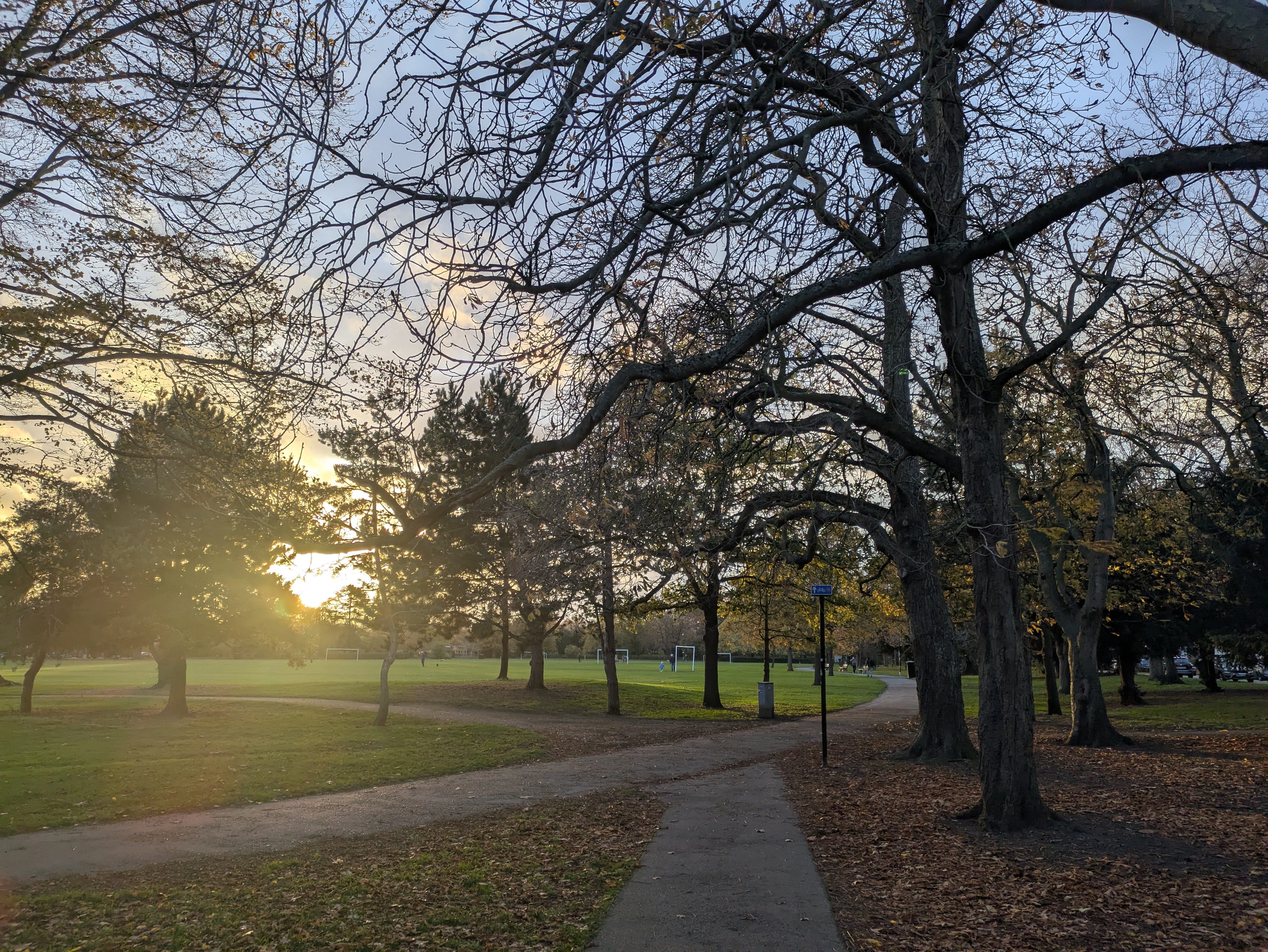
As a way to better hear the loving voice that speaks to me through the dark, I’ve taken to doing my morning routine with the lights off. Instead of startling myself by turning the bedside lamp on, I get out of bed in the dark and feel my way downstairs. In the kitchen my night adjusted eyes can see enough to allow me to unload the dishwasher and make coffee without turning on the lights. If I need to, I’ll turn on one small light or light a candle but I avoid completely banishing the dark altogether. In the dark I find I more naturally embody another pace of life - one that is slower, less harried. I believe it is the pace of my soul. Leaving the lights off is my way of saying yes to living at this pace and not the frenzied pace imposed on me by our brightly lit culture. As the sky begins to lighten and the sun comes up I pray I will remember to embody the slow wisdom of dark until it returns again to teach me.
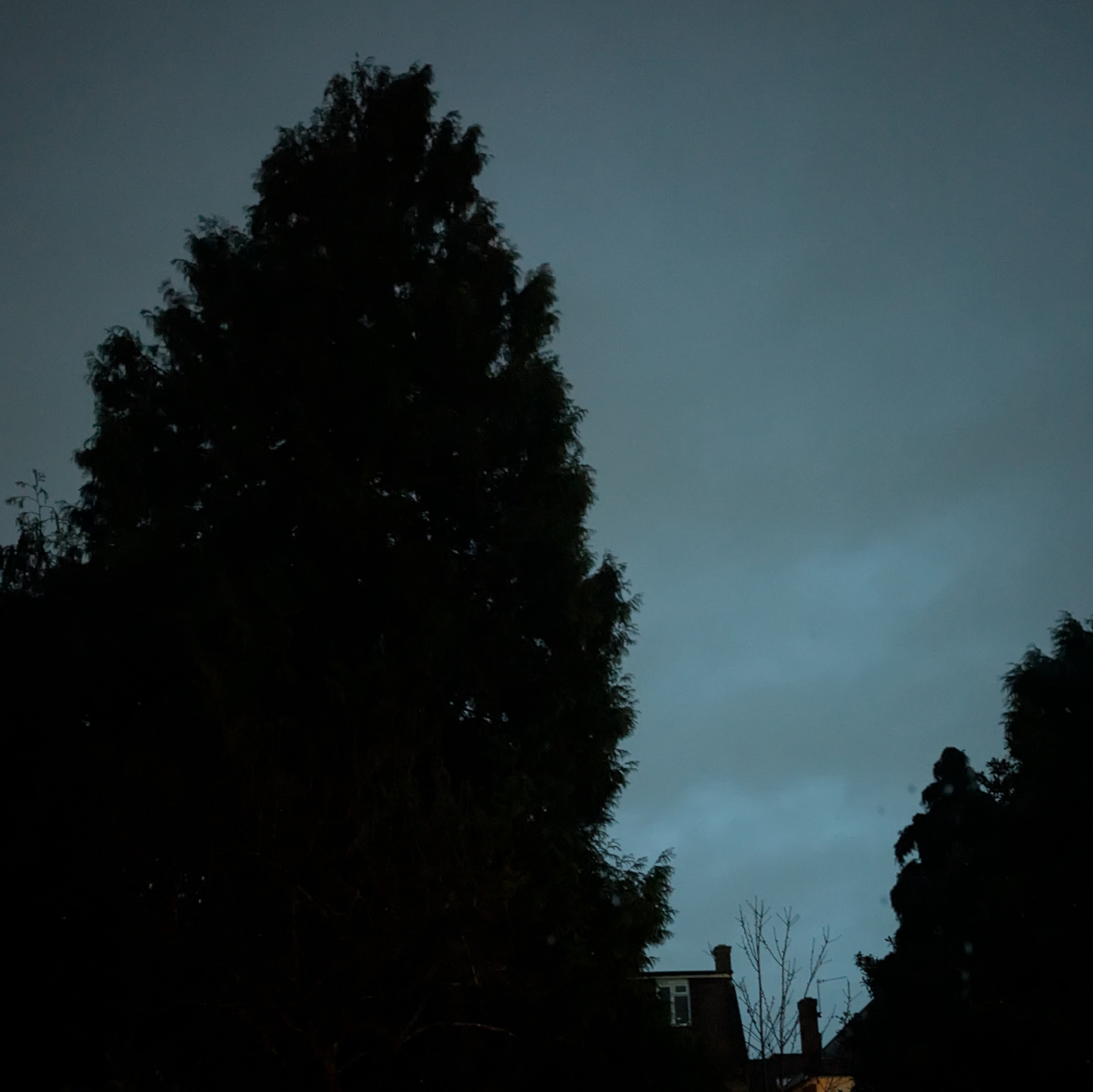
I can’t decide if my surrender to the dark is Advent appropriate or not. Advent is a season for darkness but most Advent resources frame darkness as a symbol for any and all of the things that we reject or want to move beyond. Things like ignorance and despair and the complex phenomenon of human-caused harm that we neatly refer to as “sin”. Traditionally Advent is the time when we wait in the physical and metaphorical darkness for the light of Christ to arrive. I suppose you could frame my willingness to inhabit the dark as an acceptance of the slowness of that waiting but, honestly, I’m not waiting for the darkness to leave. This year I’m savouring the dark as long as it’s offered. If anything I’m waiting in the light for the darkness to arrive.
I hope this goes without saying but my embrace of the dark is not an embrace of the things Christians traditionally associate with dark. I am not unloading the dishwasher in the dark because I have decided I want to make a home in sin, ignorance, or despair. Quite the opposite. For me the dark is a place of soulful encounter with deep wisdom and compassion. It is a place of rest and healing and insight and gentleness. In our excessively illuminated, sensory assaulting age, it’s the fluorescent light of screens and shopping centres that feels more appropriate as a symbol of despair, ignorance, and sin. This artificial light is the light of disconnection and overwhelm, the illumination of capitalism and consumerism. I want to go dark because I’ve had enough of the lies of this false brightness. In letting the lights go out, I say no to the cultural demands to become ever more mechanical in my busyness and consuming. In going dark I open to quiet, reflection, and encounter with the wisdom within.
As I write this I find that I’m curious to know if your experience of modern life has also inverted the symbolism of light and dark. Do you, like me, find yourself drawn to darkness as well as (or more than) to light or do you still find meaning in the traditional associations of light and darkness?
For those less sensitive to the sensory overload of our illuminated age, the light may feel like home and the dark may still seem a fitting as a image of all that is feared or to be avoided. Perhaps it’s only those of us who feel burned by the brightness of our culture that are ready to flip the symbolism and welcome the dark as home base instead of waiting room. In flipping the script we find companions in the mystics who have never been afraid of the dark and who tell us time and again that the deepest relationship with God is found in the dark. Like Moses who encountered God in the dark of a cloud on Mount Sinai, the mystics encounter God in the darkness beyond bright consolation and clear comprehension. They nod encouragingly at those of us who feel drawn by the invitation of these darkening winter days and invite us to pass beyond not only the physical light but also the light of our attachments, especially our attachment to our understanding. They tell us that in the deeps of absence and unknowing the darkness dazzles.
And yet, as I sit here in the dark with the companionship of a candle I realise that, for all my light-weariness, I’m not quite ready to abandon the traditional imagery of Advent. My candle speaks to me of the light that “shines in the darkness” (John 1.5) and my soul is stirred. As well as the light of flickering candle flame, the light that “shines in the darkness” evokes the light of crackling fires, fireflies and twinkling stars. This is a light that moves and dances and guides. A light that brightens and articulates the dark but doesn’t eliminate or even dominate.
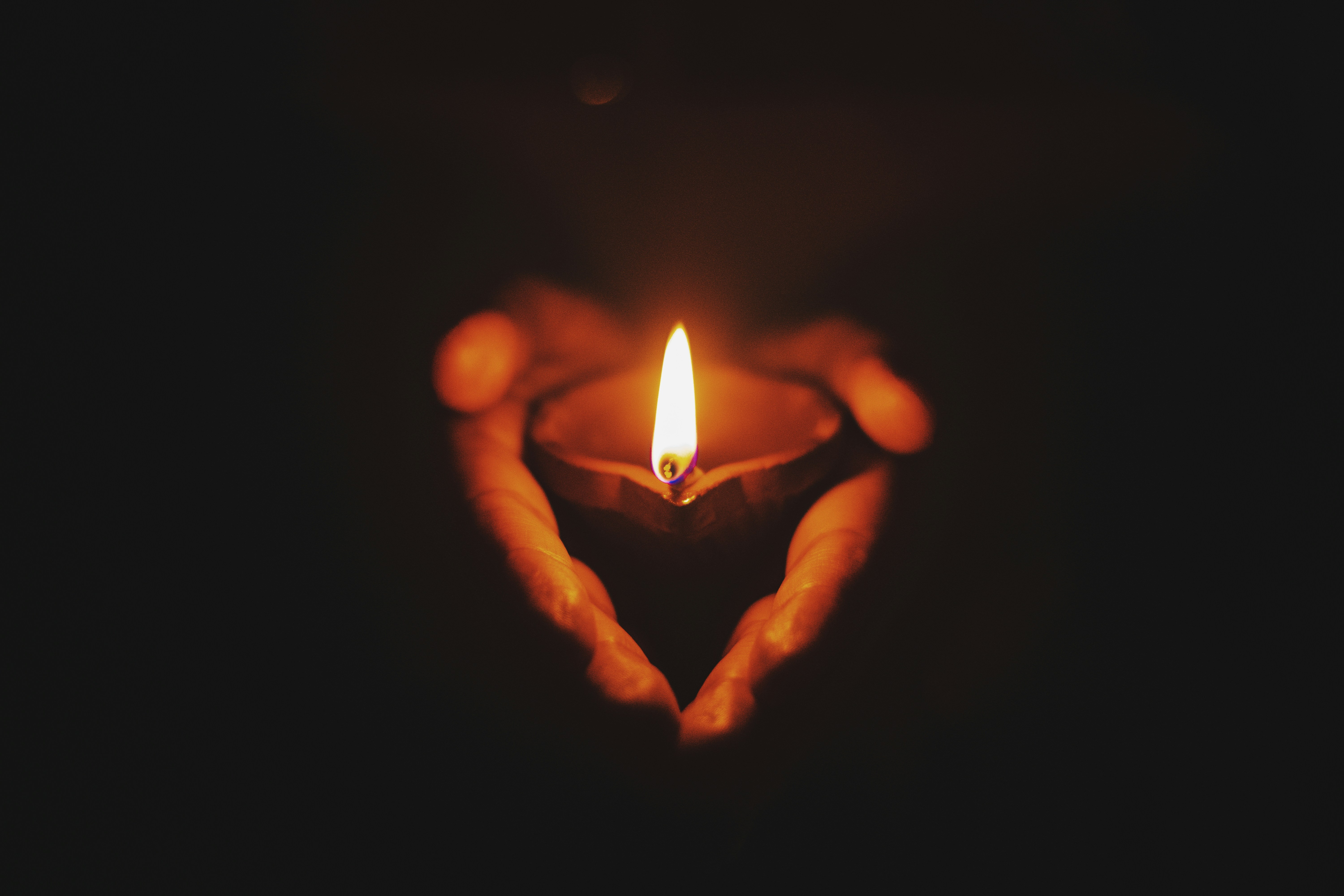
Traditionally, the light that shines in the darkness signifies the Christ light that shines as a beacon of hope in the sinister darkness of a fallen world but, as I ponder the imagery and reflect on my experience of the comfort and nurture of dark, I find that the meaning of the image shifts. In the context of darkness that is encountered as safe, wise, and compassionate, I notice that Christ’s light no longer seems to be in opposition to the dark but in friendship with the dark. The light of Christ - by which I mean the Light and Love that Christians know through encounter with Jesus - is a light that dances in the darkness of soul-rest. A light that we can encounter only when we consent to the darkening of the aggressive glare of all the false lights of commercialism and screens as well as the false brightness of our minds’ attempts to grasp and control. A light that glows within the darkness of our own inner deeps and whispers to us in sunsets: “that’s enough for today”.

Going Dark for Advent: A Practical Guide
If you too feel drawn to embrace the dark this Advent, here are a few ideas…
Where possible, let yourself experience the natural rhythms of light and dark. Practise being present to the fading light of the afternoon and the rising light of the morning. Consider that the early darkening of winter is an invitation to slow, let go and rest. As darkness falls, listen for any message it may have for you and be open to how you may “hear” this message (for example, it may come from within as an inner knowing or nudging).
Let the dark be dark. Avoid rushing to turn on the lights in the morning. Notice and savour the experience of being enfolded by darkness. Know that you are not only tending your soul but also taking care of your body. Melatonin production is stimulated by darkness and this hormone not only helps with sleep regulation but is also a powerful antioxidant that repairs cell DNA, reduces inflammation and boosts the immune system.
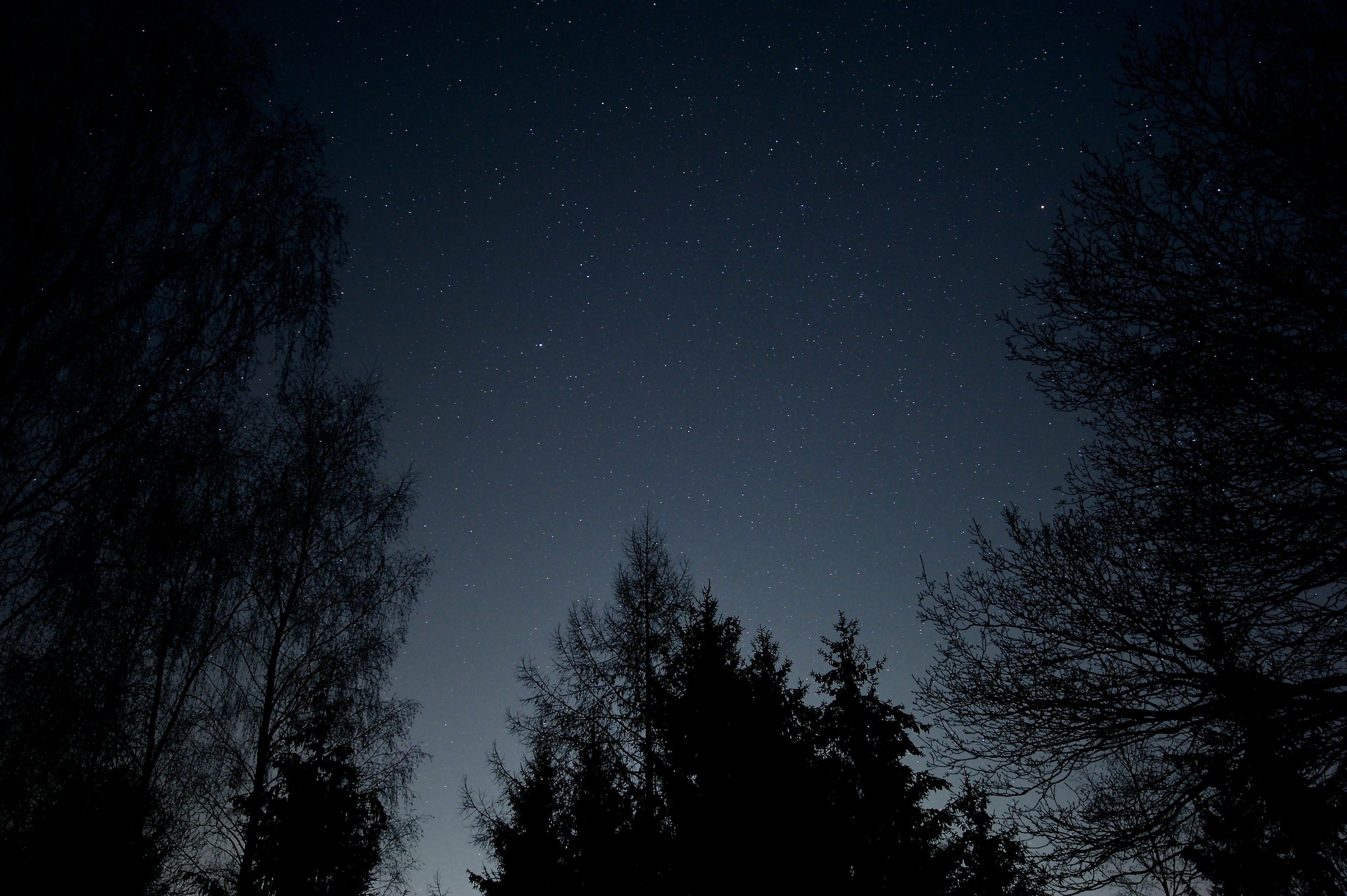
Go outside and experience the natural world in the dark. Notice how your other senses are heightened but don’t forget to look at the moon and stars.
Avoid using bright, overhead lights in the evenings and early mornings. Where possible use lamplight, candlelight and firelight instead. Let these soft and/or natural sources of light guide you in a meditation on Divine Light and what that means to you.
Minimise screen time and dim your phone screen. Consider a social media fast during dark hours.
As needed, visit the dark during daylight hours by closing your eyes and breathing your way towards the dark within. Practise making a home in the cave-like deeps of your heart.
Reflection Questions for a Dark Advent
What have been some of the key events or experiences that have shaped your relationship with the physical dark?
What does the dark symbolise for you?
When have you experienced the Divine in the dark - physical or metaphorical?
What thoughts, feelings or questions are stirred when you consider moving deeper into the dark?
Readings for a Dark Advent
First, a poem from Gideon Heugh’s lovely little Advent book: Darkling.
An Invocation for Advent
by Gideon Heugh
Welcome, stranger. Come in. Lay down.
Let us remove this burden of light
that you have carried around for too long.
It is not the darkness that has blinded you.
But now, free from the glare,
you can let your eyes adjust.
Now, sheltered from all that knowing,
you can sit within the shadows’ strange conferring.
Together we will light a candle -
not to vanquish the dark,
but to further articulate it.
Here may you find the wisdom of winter.
Here may you unlearn the folly of a life
that always climbs the mountain,
that believes in accumulation,
that does not join God as she too lies fallow-
as she too opens herself
to absence.
Next, a taste of the mystic’s experience of the dark. In this poem the dark is a metaphor for the withdrawal of the “lights” of the senses and of spiritual consolations. When John says that his house has “at last, grown still” he means that his soul has been freed from the busyness of attachments and self-directed efforts towards spiritual growth. In the darkness of complete surrender, left only with his Love for the Divine, God (the Lover of his soul) leads John into the self-forgetful bliss of Divine union.
The Dark Night of the Soul
St John Of the Cross, translated by Mirabai Starr
On a dark night,
Inflamed by love-longing–
O exquisite risk!–
Undetected I slipped away.
My house, at last, grown still.
Secure in the darkness,
I climbed the secret ladder in disguise–
O exquisite risk!–
Concealed by the darkness.
My house, at last, grown still.
That sweet night: a secret.
Nobody saw me;
I did not see a thing.
No other light, no other guide
Than the one burning in my heart.
This light led the way
More clearly than the risen sun
To where he was waiting for me
–The one I knew so intimately–
In a place where no one could find us.
O night, that guided me!
O night, sweeter than sunrise!
O night, that joined lover with Beloved!
Lover transformed in Beloved!
Upon my blossoming breast,
Which I cultivate just for him,
He drifted into sleep,
And while I caressed him,
A cedar breeze touched the air.
Wind blew down from the tower,
Parting the locks of his hair.
With his gentle hand
He wounded my neck
And all my senses were suspended.
I lost myself. Forgot myself.
I lay my face against the Beloved’s face.
Everything fell away and I left myself behind,
Abandoning my cares
Among the lilies, forgotten.
Finally, a favourite poem by Wendell Berry.
To Know the Dark
by Wendell Berry
To go in the dark with a light
is to know the light.
To know the dark, go dark.
Go without sight, and find
that the dark, too, blooms and sings,
and is traveled by dark feet and dark wings.
I can totally recommend “Learning to Walk in the Dark” by Barbara Brown Taylor.
Thank you. I think this will help my usual sadness during winter. I love lighting a candle in the dark, I need to get back to that.